
Tuning & Care · April 8, 2026
Do I have to Tune My Piano?
So you’ve finally decided to purchase a piano. Maybe your kid started piano lessons, or you’ve just rediscovered your passion for music. Whatever the case, there is a shiny new instrument standing in your living room. All yours, hopefully for many years to come. You want to take good care of it, but how?
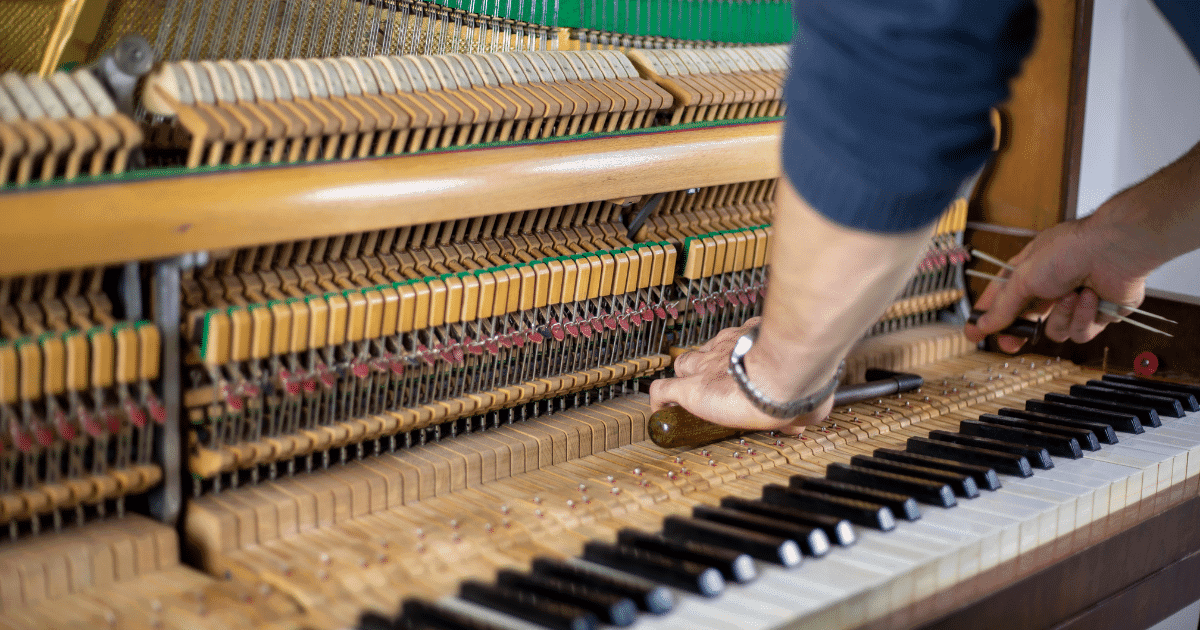
It’s understandable that learning about piano maintenance might be frustrating. With piano cost as high as it is, realizing you need to spend more money on piano tuning sounds unreasonable. But try to think of it as protection of your investment, rather than an expense. You’ve just spent a pretty penny on a beautiful instrument. Tuning your piano regularly will not only ensure its performance but increase its longevity as well. With proper care your piano can stay in the family for many generations to come, bringing music and joy to your children and grandchildren.
Why is regular piano tuning necessary? Because these are highly sensitive and sometimes finicky instruments that react to the slightest fluctuations in climate and weather. Since most pianos are made of wood, they are highly sensitive to changes in temperature and especially humidity. Wood can absorb the moisture in the air, becoming supple. It can also become extremely dry in arid environments. Being exposed to heating and air conditioning can further worsen this effect.
As an aside, this phenomenon is not limited to pianos. If you’ve played other musical instruments made of wood, you may have experienced something similar. Because the strings in a piano (and other musical instruments) are attached to the wood, an expanding or shrinking wooden frame will pull on the strings differently and result in a different sound.
Besides being susceptible to the weather, simply sitting down to play piano will put strain on your instrument and will have an effect over time. The more you play, the more the strings and hammers inside your instrument come under pressure. Getting your piano tuned regularly is akin to taking it to a spa and working out the kinks in its sore muscles. It will also act as a preventative measure for needing more serious piano repairs down the road.
Immediately after a piano tuning, you will notice an improved more harmonious sound. Your instrument will be a pleasure to play. So don’t wait for your instrument to fall into disrepair. Find a reliable piano tuner, someone you can trust, someone who will care for your piano as if it were their own. And enjoy the music!